

Artificial intelligence is becoming the next competitive divide in transportation, logistics, and defense (TLD). The shift is already visible in the numbers: 12% of transportation, aviation, and automotive CEOs report AI-enabled revenue gains above 20%, the highest share of any industry surveyed in the Oliver Wyman Forum and the New York Stock Exchange’s 2026 CEO Agenda. As AI moves from pilots and productivity tools into core operations, a small group of companies is pulling away — improving asset utilization, accelerating engineering cycles, reducing downtime, and building operating advantages that compound with every deployment.
The shift is already reshaping how these industries, from aviation and rail to automotive and logistics, are designed, built, operated, and monetized. The companies embedding AI into their operating models are creating learning loops and competitive edges across the organization: Each deployment generates operational data, process knowledge, new edge cases, and organizational confidence to make the next deployment stronger.
Meanwhile, many legacy players remain uncommitted and risk waking up to a gap that is increasingly difficult and expensive to close. In asset-heavy, safety-critical, and regulated industries, advantage will come from industrializing AI, not simply deploying more use cases. That means building the operating discipline to scale AI safely across physical assets, frontline workflows, and mission-critical decisions.
To better understand the growing divide and how late movers can take practical steps to scale AI, the Oliver Wyman Forum and the University of California, Berkeley, worked with an advisory panel of academic and corporate leaders to interview more than 50 transportation and industrial experts. This report draws on those interviews and on recent Oliver Wyman Forum surveys of chief executive officers and chief financial officers, consumer research, and market analysis across aerospace, automotive, aviation, defense, industrial goods, infrastructure, logistics, and rail.
While AI is constantly advancing, the technology available today is not a constraint to creating immediate value. Industry players already should be deploying AI technologies such as pattern learning and optimization, virtual simulation and digital twins, AI agents, physical automation and robotics, and autonomous mobility.
And yet, successful AI adoption is uneven. Firms now fall into one of three archetypes in how they scale AI: A small group of leaders that embed AI into operating models, products, and management systems; adopters that use AI to improve existing core processes and see significant impacts, but have not yet turned AI into enterprise-wide advantage; and late movers that remain slow to scale AI.
In the next five to 10 years, AI will enable TLD firms to move toward entirely different operating models, such as rail systems that self-optimize and absorb disruptions autonomously, or self-dispatching freight networks.
To unlock that potential, firms must build the right conditions for AI to scale rather than just add more pilots or technology investments. Firms that scale AI throughout their business will multiply their edge: Better operations generate better data; better data improves models; better models improve decisions; and better decisions further strengthen the operating model.
This report explains what transportation, logistics, and defense CEOs and boards must do to avoid falling behind, and identifies where value pools are shifting.

AI is opening a structural and competitive divide across transportation, logistics, and defense (TLD)
TLD’s competitive AI divide is real and tangible. Only 12% of transportation, aviation, and automotive CEOs, for example, report AI revenue gains above 20%, the highest of any industry. Driven by technology, proprietary data, operational capability, and organizational readiness, companies that are benefiting from AI are building a strategic moat around themselves.
Two groups trail behind the AI leaders that are embedding AI at scale across company-wide operations: AI adopters, which are using AI to improve existing processes but have not yet turned it into enterprise-wide advantage, and AI late movers, those with limited or poor integration, which remain slow to commit capital, build data foundations, redesign workflows, or establish the governance needed to embed AI safely in operational environments.
The automotive industry shows how this lead multiplies: AI-native competitors are accumulating proprietary training data and iterating on software that increases vehicle efficiencies or provides innovative add-ons, while incumbents are still modernizing the data infrastructure required to begin. Consider also where investment funding is flowing: Recent AI advances provided the connected vehicle and self-driving sectors the biggest funding growth among all mobility sectors in 2024, with global funding reaching $18.2 billion — double from 2023, according to Oliver Wyman analysis.
For late-moving rivals, what makes this dynamic existential rather than merely competitive is that AI learning compounds in both directions. Early movers improve their models with every deployment cycle and failure. A near-miss in a validation run, an edge case in a maintenance prediction, or an anomaly in a production line are all data points that make the next model better.
Late movers will have more difficulty catching up to this group, as they’re starting without accumulated data, lessons, and operational experience.
Data and organizational readiness are widening the gap in AI competitiveness
Many firms are still slow to adopt AI. Less than a third of CEOs in industrials, aerospace, and defense are even piloting AI, versus 49% across all CEOs, and only 8% of CEOs from these sectors report using AI at scale, versus 23% of CEOs overall.
An intensifying penalty for waiting takes different forms depending on the business. AI-native companies must compete in every development cycle to ensure that their models don’t fall behind in performance, proprietary training data, and product capability. For incumbents integrating AI into operations, the penalty is organizational: Late movers must modernize data infrastructure, processes, and skills simultaneously, under competitive pressure, with fewer safe cycles to experiment. In both cases, early movers absorb disruption incrementally while latecomers face a compressed, higher-risk transformation.
In addition to data, the compounding barrier also spans talent, governance, and organizational confidence, which are dependent on each other for development, and cannot be built overnight. Embedding AI technologies and applications into the operating model should not be treated as a one-off initiative but as a major multiyear transformation.
Integrating AI into TLD is a transformative change that takes time and careful planning
Not all AI use cases have the same time constraints: Copilots and workflow agents can often be trialed within months, but the highest-impact value pools in transportation, defense, or logistics are a different category entirely. Autonomy, robotics, and safety-critical assurance require redesigned operating models, end-to-end data pipelines, validation frameworks, human oversight architecture, and regulatory confidence — which take years to build and cannot be compressed regardless of how capable the underlying models become.
Organizations and regulators need the right ecosystem to deploy this technology, which often requires long and complex transformations. Every year spent not building that ecosystem is a year of irreversible delay; unlike model access, operational maturity has to be grown rather than simply procured when needed. The AI gap is becoming self-reinforcing, and governance is where late movers are most exposed. Competitive advantage in AI is shaped by two distinct sets of constraints: external pressures that every company must juggle — like AI developers or macroeconomic pressures — and internal governance gaps that every company must close.
AI integration hinges on computing, energy, and infrastructure access
Every TLD company, whether it is building AI-native products or deploying AI into existing operations, now depends on a small number of hyperscalers and foundation model providers for compute, infrastructure, and model access.
These providers set the terms, and the unit economics of AI — such as the cost per query of an AI chatbot — must be stress-tested before scaling, since every use case should survive a scenario where compute is more expensive, not less.
Organizations that have not established their cloud and AI procurement architecture will find themselves making consequential commitments under time pressure, with less room to negotiate.
Energy costs and chip availability add pressures that individual companies don’t control. The growing electrification of heavy industry and transportation, in parallel with the infrastructure demands of data centers, is expected to increase global electricity consumption by 3.6% annually through 2030. Pressures like these are causing 57% of global CEOs to cite macroeconomic conditions as the most prominent threat in 2026, with 41% naming geopolitics and trade policy.
Compute and energy availability are geopolitically constrained and must be treated the same way: secured early, diversified where possible, never assumed. Aligning strategies between these two factors will provide structurally better AI economics than treating resources as infinite.
Firms looking to secure access to computing power should look to moves within the industry, where some Korean and Taiwanese semiconductor players are investing in American cities for improved market access.
AI advantage depends on executive and board ownership of technology, risk, and operating model change
Internal governance structures are equally binding and more directly addressable. Board involvement in AI strategy is lower in the transportation sector than the average of all industries, with CFO engagement particularly low. Consider also that boards at all companies reporting a high ROI on AI (more than 10% total cost savings or revenue generation) have increased their involvement in AI strategy at nearly twice the average rate, according to global CEOs surveyed by the Oliver Wyman Forum.
Board involvement matters in both compliance and operations: Comprehensive AI deployment requires capital allocation decisions, risk tolerance frameworks, and accountability structures that cannot be delegated to technology teams. Without early board and CFO strategic engagement, firms will find themselves making consequential commitments — on vendors, architectures, and operating models — without the governance infrastructure to manage them.
The firms now accumulating AI capabilities are restructuring how strategic advantage is built and held in physical-economy industries. This is why scaling AI is best understood as a multiyear industrialization effort rather than a technology project. Moving from pilots into production requires concentrating on a limited set of high-impact opportunities, assigning clear P&L ownership, and treating capital allocation, risk tolerance, workforce redesign, and operating-model change as board and executive committee decisions.
That requires a startup mindset of continuous adaptation of talent models and skills, hiring specialized capabilities, and evolving decision-making processes. Asymmetries between companies and regions in their ability to attract, retain, and nurture top AI and data engineering talent are already shaping long-term competitive positions in ways that are difficult to reverse. Building institutional knowledge among employees takes time, and expertise is not something easily or quickly bought from outside talent at a later time. Executives who think they can plug-and-play AI technology within their organizations are making a similar mistake with talent.
Executives and boards have multiple priorities. First, security, reliability, and trust must be engineered from the outset: Unlike chatbot hallucinations, AI failures in industrial environments could spur production halts, safety incidents, and regulatory exposure. The organizations scaling AI in safety-critical environments have built control architectures, domain-specific guardrails, and organizational disciplines to operate AI within defined risk boundaries before deployment, not after.
Second, the regulatory and liability environment is changing faster than most deployment timelines anticipated, with AI increasingly treated as a regulated product globally whose outputs carry liability. Organizations that build compliance into architecture, documentation, and vendor selection from the start gain deployment speed. Firms that have not solved for these conditions will not scale AI in operational environments regardless of model quality or data foundations. They’ll instead be stuck in a recurring rework loop.
None of this is constrained by the maturity of the technology itself. The relevant AI capabilities — machine learning, simulation, computer vision, optimization, agents, robotics, and autonomy — are already mature enough to reshape physical operations in specific domains.
The more important question is how to integrate them into asset-heavy, safety-critical, and regulated systems where reliability, cost, data access, and human oversight determine whether value scales and which side of a competitive divide a firm will sit in.
That is why the next decade’s growth opportunities will center on interconnected transportation and industrial systems that learn, coordinate, and improve performance across fleets, networks, factories, logistics flows, and sites rather than individual AI technologies. The next section maps where those opportunities will concentrate over the coming decade.

The next decade’s growth opportunities center on interconnected AI TLD systems
By 2035, AI will reshape transportation by cutting costs and improving how entire systems operate with continuous and proactive adaptation rather than reactive adjustments. Technology will be able to detect mechanical failures before they happen and plan accordingly, or power cobots that determine they’re needed on a different assembly task and proceed without manual reprogramming. Coordinated assets, simulated complex physical environments, and intelligence embedded into field operations will improve throughput and reliability.
The next frontiers are systems that learn, coordinate, and improve performance widely rather than automate in isolation — often in interaction with human operators, and within the constraints of regulation, data availability, and operational complexity. The expert perspectives interwoven throughout this section reinforce this shift, pointing to a future where advantage is defined less by individual technologies and more by how effectively organizations design and operate these intelligent, interconnected systems.
Smarter rail networks deliver more capacity from the same infrastructure
Rail’s most immediate AI opportunity is in optimizing existing infrastructure. Smarter scheduling, real-time delay management, and predictive maintenance can materially increase throughput and punctuality on corridors that have hit the limits of timetable-based control.
Rail networks are implementing some of these capabilities. Singapore, for example, partnered with a tech firm in April 2026 to deploy AI that unifies data distributed across standalone systems and creates a predictive maintenance analysis based on train performance, sensor readings, and asset lifecycle data. Elsewhere, New York’s public transit authority recently partnered with a different tech firm to retrofit smartphone sensors to subway cars to capture vibrations and sound patterns. AI and machine learning algorithms then analyze the sounds and vibrations to generate predictive maintenance insights.
AI enables new aircraft and airspace traffic flows
The winners of this space will be defined by speed and adaptability. Aircraft manufacturers must certify their aircraft the fastest and adapt operations to low-altitude airspace, while infrastructure manufacturers must satisfy regulators and ensure safety despite the increasing amount of traffic and diversity of fleets sharing that airspace.
Early air taxi movers can capture a sector expected to reach $7.6 billion in global revenues by 2035, up from $3.1 billion in 2030, according to an Oliver Wyman Forum analysis.
Autonomous software hastens automotive safety and performance testing
Automotive safety and performance design have been slowed by testing in physical environments, which are sequential, expensive, and reset with every design change.
AI shifts a significant share of that burden into simulation: World models trained on real fleet data can stress-test braking systems, edge-case scenarios, and control architectures at a breadth and speed that physical testing cannot match, while synthetic data fills the gaps that real-world collection cannot safely cover.
Many automotive R&D executives anticipate AI will disrupt the typical development process by leveraging libraries of products to design and test simultaneously, according to Oliver Wyman analysis.
AI turns asset-intensive sites into continuously optimized systems
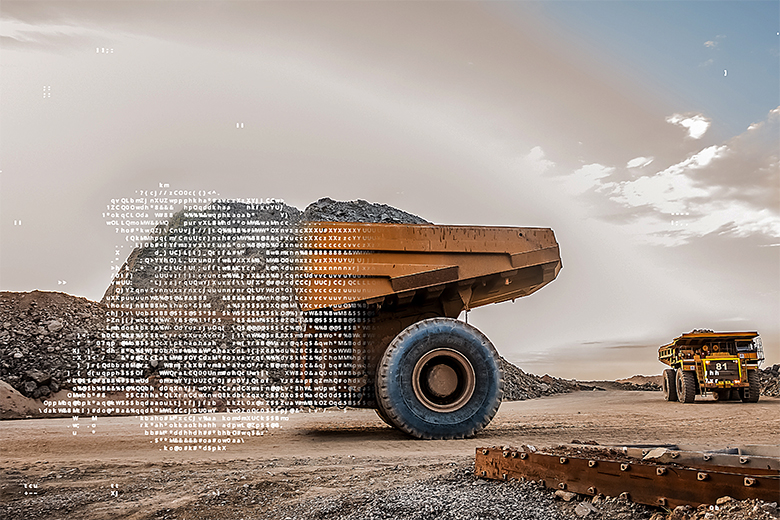
Mining will move from manually coordinated operations to fully orchestrated, autonomous sites. AI can synchronize fleets, equipment, and extraction in real time, maximizing utilization, increasing output, and turning one of the most asset-intensive industries into a continuously optimized system.
AI powers real-time logistics orchestration
Logistics will move from a network that coordinates reactively to one that dispatches, reroutes, and recovers autonomously. AI agents will manage capacity matching, exception handling, and last-mile sequencing in real time, while autonomous trucks eliminate the scheduling constraints that occur when drivers are not available.
Capturing this value at scale today remains the exception, not the rule. The gap between what is possible and what is realized is not driven by ambition or use cases, but by the difficulty of deploying AI in real-world, safety-critical, and legacy-heavy environments.
Existing AI applications are driving impact
For TLD, the AI applications that matter most for value creation are already sufficiently mature and deployed by leading companies that are winning measurable gains to cost, throughput, reliability, and safety.
Machine learning, optimization, computer vision, and simulation have been delivering measurable impact in real operating environments for years. Recent advances have made AI more visible and more accessible, but they have not fundamentally changed what is possible.
AI is often treated as a single technology — a perception reinforced by the rapid rise of generative AI and large language models. AI is, in practice, a stack of diverse technologies with different roles, maturity levels, and deployment requirements. Reducing AI to chatbot models risks misdiagnosing its relevance, either by overestimating its immediate impact or by underinvesting in the capabilities that drive operations.
These capabilities include systems that optimize operations from data, simulate complex environments, automate decision workflows, enable autonomous operations, and extend physical automation. The same technologies also define the product itself for a growing set of AI-native companies: autonomous vehicle platforms, intelligent aircraft systems, and software-defined industrial equipment where AI capability is the primary source of operational differentiation.
Pattern learning and optimization
These AI systems analyze large volumes of operational data to detect patterns and predict outcomes, and can continuously optimize decisions such as routing, scheduling, maintenance, and resource allocation. This enables organizations to move from reactive to predictive operations that improve reliability, utilization, and cost efficiency in real time.
Machine learning is the core engine; clean, well-structured operational data is the prerequisite that determines whether outputs are trustworthy enough to act on. Deployments range from predictive maintenance in industrial facilities — where one industrial technology leader cut unplanned downtime by 85% and freed 250 operator hours per month — to dynamic scheduling and resource allocation across logistics networks. The technology is mature, and third-party solutions are widely available, making this the most accessible entry point for companies earlier in their AI journey. Companies not yet using it are leaving measurable efficiency gains on the table.
Virtual simulation and digital twins
AI-powered simulation and digital twins create high-fidelity virtual representations of assets, processes, and environments, allowing companies to test scenarios, validate designs, and optimize operations without physical constraints.
This compresses development cycles and reduces testing costs, while enabling decisions that would be too dangerous or expensive to test in the real world.
Deep learning, machine learning, and computer vision give these environments the fidelity to reflect how real systems behave, but building simulation infrastructure with sufficient accuracy to be operationally trusted requires significant data investment and domain expertise.
The highest-impact deployments are in asset-heavy industries with long development cycles: Automotive companies are cutting testing costs by over 50% and time-to-market by similar margins. Companies that have not yet built simulation capability are absorbing those costs in physical testing and experiencing slower iteration and delayed validation. The next evolution — AI systems that learn physical rules from data and generalize to environments they have never experienced — is the key idea around world models, covered in more depth in the section on frontier AI.
AI agents
AI agents automate complex, multistep workflows by combining reasoning, data access, and system integration. They support or execute decisions across functions such as planning, maintenance, supply chain, and customer operations, reducing coordination effort and increasing execution speed across the enterprise.
Agents must understand language, plan multistep tasks, act within systems, retain context, and operate safely in production. Their capabilities span a spectrum from decision support to full autonomous execution, with each step demanding deeper embedding into the operating model. A digital freight broker has deployed more than 30 agents across its logistics lifecycle, cutting scheduling times by up to 38% and cutting delay durations by nearly 80%. The technology is broadly mature, but production deployment remains uneven. The constraint is process redesign and integration depth, not model capability.
Physical automation and robotics
AI extends into the physical world through robots that can perceive, adapt, and perform tasks in dynamic environments. This allows automation to be flexible and move beyond fixed, repetitive processes, increasing throughput, and safety in areas such as manufacturing and infrastructure operations.
The enabling technology closely mirrors autonomous mobility but shifts the emphasis from navigation to manipulation and physical interaction. Safety verification carries particular importance, as robots operating alongside human workers require certified behavioral guarantees before deployment is permissible. Early movers are already operating autonomous fleets at scale in mining and running multi-robot fulfilment systems across global warehouse networks — with productivity and cost impact that is beginning to redefine what human-only operations can competitively justify.
Autonomous mobility
AI enables vehicles and mobile assets to perceive their environment and operate with limited or no human intervention. This can increase efficiency, safety, and asset utilization across transport, logistics, and industrial operations — particularly in structured or semi-structured environments where operational conditions are predictable enough to certify.
Safe autonomous operation requires vision, localization, planning, and control to work reliably in real time. The technology is proven in bounded environments: Fully autonomous mining fleets are operational, and robo-taxi services are completing hundreds of thousands of paid rides weekly. Scaling beyond these environments depends less on model capability than on regulation, liability frameworks, and integration into existing operational workflows. The constraints are the conditions under which society and regulators will allow autonomous systems.
Frontier AI
Frontier AI — the most advanced, cutting-edge AI systems today that can perform many different tasks at an advanced level — is not yet institutionalized, but it will shape the next ceiling of AI performance in TLD. The prior applications show where AI already is creating value today. Technologies like world models and quantum computing address physical complexity, data scarcity, combinatorial optimization, and assurance limits.
World models simulate physical environments and predict how systems evolve in situations never before encountered, making them highly relevant for autonomy validation, robotics training, synthetic data generation, and operational digital twins. Their current value is domain-specific rather than general-purpose, but this is already enough to matter greatly in TLD systems, where proprietary physical data can become a strategic moat.
Quantum computing will enable faster computations of AI algorithms — all priority areas in asset-intensive, networked industries. The technology remains early-stage, so the executive action is not broad deployment but targeted readiness: partnerships, talent, cybersecurity, and identification of workloads where traditional methods hit hard limits.
Leaders should treat these technologies as an optionality portfolio. World models warrant targeted experimentation now where physical data and simulation workflows already exist. Quantum computing warrants monitoring, selective partnerships, and risk preparation. The winning posture is disciplined readiness linked to real operational bottlenecks.
TLD leaders need more than one AI strategy
The applications described in this section span a wide maturity range — from predictive maintenance that delivers returns today to autonomous systems still being validated for broad deployment. That spectrum reflects a structural split in how AI creates value in these sectors: a set of workflow and optimization tools that are broadly accessible and can be deployed with relatively low barriers, and a set of mission-critical capabilities — autonomy, robotics, physical control systems — that require years of investment in data infrastructure, safety engineering, and operational integration before they move the P&L.
The two are not in competition, and leading companies are pursuing both. But they require different timelines, governance, and definitions of success. Treating them as a single AI program is one of the most common ways organizations misallocate capital and misread how far behind they are. Understanding the distinction is necessary, but it is not sufficient. Across both curves, the organizations that have moved beyond pilots share one experience: Deployment in these sectors is harder, slower, and more expensive than anticipated, not because the technology is immature but because of the complexity in reliably analyzing data from a broad number of sensors operating in different conditions and across multiple equipment and regulations.

C-suite needs a clear checklist to implement AI
Closing the gap between AI potential and real impact is an operational challenge in development, implementation, and adoption. While many companies have access to similar tools, only a few have translated AI into widespread operational and financial outcomes.
Successfully deploying AI goes beyond the IT department to a comprehensive business transformation that requires active ownership from the highest levels of the organization. Without a clear mandate and strong enforcement from the board and executive committee, AI initiatives risk remaining fragmented, underfunded, or limited to isolated pilots.
Leading organizations move beyond isolated use cases and instead align strategy, technology, governance, and the operating model around a small number of high-impact priorities like virtual simulations or physical robotics.
Based on interviews and our advisory panel of 13 members, the following sections outline how these front-runners consistently overcome the barriers that stall most organizations, and how they build the capabilities required to turn AI from experimentation into enterprise-wide value.
Strategy and governance
Most companies fragment resources across too many AI initiatives. Instead of concentrating effort on a few transformative bets, they spread budgets and talent across pilots that never reach production or move the P&L. The AI technologies that can reshape operating models are available today. Legacy players that wait for the next phase of AI models or strong ROI use cases may find it harder to catch up to their competitors.
AI transformation is too often delegated to the IT department when it should be owned by the business. Without clear board and executive ownership, organizations default to low-risk experimentation at the edges, while the applications that matter most often require strategic commitment before near-term ROI is visible.
Data and IT readiness
AI late movers often do not have the necessary data and IT to support AI in live operations. Their data is difficult to access in real time, poorly organized, and fragmented and disconnected across systems. As a result, promising use cases work on isolated datasets but stall in production. The issue is whether the underlying data can be accessed, connected, governed, and used reliably across the operating environment as it becomes among the most critical assets.
Workflow redesign
AI that is deployed alongside work rather than embedded into it often causes employees to revert to existing processes or use personal workarounds. AI may generate insight, but decisions and behaviors remain unchanged.
While a machine can be augmented with AI relatively easily, a factory, plant, or network operation is much harder. These are human-enabled systems with established routines, informal workarounds, multiple handoffs, and many failure modes. Unless AI is built into workflows, adoption stalls. Consider that CEOs of AI deployment leading firms — those scaling AI in at least two categories of use cases and receiving notable ROI — are significantly more likely to be redesigning workflows (49%) than the global average (38%), according to Oliver Wyman Forum analysis.
Finally, guardrails against AI’s constraints and risks must be embedded in the operating model, ensuring best practices across safety, cybersecurity, and regulatory compliance.
Change management
Leading companies anticipate which activities will be performed by AI agents, robots, or autonomous equipment — and which human roles and capabilities will become more valuable. They treat workforce transformation as part of the AI initiative from the start. These firms redesign roles, evolve the talent model to integrate human and non-human collaboration, train frontline and managerial staff, and recruit targeted talent for specific business units. Those who don’t engage in the right change management default to resistance, underuse, or superficial adoption. They also risk investor disapproval, with Mercer’s 2026 Global Talent Trends study finding that 97% of investors say their view of a firm lowers when its approach to agile, skills-based models falls short.
Serving employees’ desire for AI skills can help prevent that internal resistance. The desire for training to further develop skills among workers has seen a relative leap of 98% between 2021 and 2025, according to a five-year Oliver Wyman Forum study of how 300,000 workers feel across 20 countries.
Only about a third of employees are confident they are getting the skills they need, but those that do are far more assured and engaged. Their job satisfaction has held steady between 88% to 90% since 2021, while the general population has swung between 68% and 71%.
Leaders also need to navigate a fragmented workforce holding varied views on AI. Consider Gen Z, which has adapted to AI faster than any other generation. Younger workers are 1.7 times likelier to attend AI training, twice as likely to report skill gains, and 2.3 times more likely to say AI improves their output. While frequent use has surged 65% among Gen Z since 2023, 45% of boomers have stopped using AI at work altogether.
Indeed, our research for this report has found that senior workforces are slower in both adoption and acceptance, while those at the manager level need to become accustomed to managing younger workforces armed with a proliferating technology in AI.
Impact capture into P&L
Most companies fail to capture the value generated by AI. Each deployment generates data and operational knowledge that improves the next one — but only if financial impact is measured and captured into the P&L.
AI often delivers measurable productivity gains — faster engineering cycles, fewer defects, reduced downtime — but those gains do not automatically translate into financial impact. Freed-up time is absorbed into existing activities, output increases are not monetized, and cost structures are not adjusted to capitalize on the efficiencies created. As a result, the P&L does not move.
Technology sourcing
TLD leaders must choose the right AI technology for the job. Many organizations overinvest in the most advanced models without aligning technology choices to actual use case requirements. This leads to unnecessary cost, architectural complexity, and limited scalability. At the same time, lengthy and unclear build versus buy decisions create fragmentation, and long-term lock-in risks. And even when technology solutions are fully procured, organizations must still invest in upskilling its workforce so that employees can effectively operate and manage them.
Firms must also monitor the market for new, AI-powered disruptors in the market and adapt quickly. Making the right acquisitions will be critical to compete.

The AI challenge to TLD leaders is to act now or fall behind
AI in transportation, logistics, and defense has moved beyond promise, and already is delivering tangible gains for TLD firms. The technologies are available, the use cases are proven, and the value pools are available. The question now centers on which companies will capture that value and which will fall behind.
The defining challenge is the ability to deploy technology in complex, safety-critical, and legacy-heavy environments. This is where the gap between leaders and the rest of the market is widening. This group is building capabilities now rather than waiting for perfect conditions — embedding AI into their operations, reshaping their operating models, and multiplying the advantage with every deployment cycle.
Waiting is the highest-risk strategy. The organizations that act now — focusing on a few high-impact priorities, building the foundations for scale, and committing to transformation — will define the next generation of performance in TLD.
The implications depend on where a company stands today.
Companies that have not yet committed to AI deployment
The organizational readiness gap — data infrastructure, deployment capability, change management capacity — grows every quarter without committed investment, and cannot be closed quickly. The first decisions are about commitment and concentration, not capability building.

Appendix
Technology readiness
AI is often treated as a single technology — a perception reinforced by the rapid rise of generative AI and large language models. In practice, AI is not one capability, but a stack of diverse technologies with different roles, maturity levels, and deployment requirements. Reducing AI to chatbot models risks misdiagnosing its industrial relevance — either by overestimating their immediate impact or by underinvesting in the capabilities that actually drive operations.
The more important point for TLD is that the technologies that matter most for value creation today are already sufficiently mature. Machine learning, optimization, computer vision, and simulation have been delivering measurable impact in real operating environments for years. Recent advances have made AI more visible and more accessible, but they have not fundamentally changed what is possible.
What matters instead is how it is applied
AI’s full potential to create value unfolds when it is infused with domain knowledge and steered by people who understand the systems it operates in. In TLD, this means engineering expertise, operational constraints, safety requirements, and workflow logic.
Generic models may be widely available, but meaningful performance depends on how well they are adapted to the realities of the operating core.
This is amplified by the structure of the sector: Value is concentrated in mission-critical processes, and deployment must happen in brownfield, fragmented IT/OT environments.
This is what makes AI fundamentally different from traditional enterprise IT. While IT systems support workflows, AI shapes decisions within them. In TLD, that shift brings AI directly into engineering, maintenance, production, and physical operations. The differentiator for firms lies in the quality of that integration into realworld systems and decisions.
As a result, ownership changes. While foundational capabilities remain largely IT-led, the application layer increasingly depends on business, engineering, and operations teams shaping how AI is used. These teams become co-designers of how intelligence is embedded into workflows. At the same time, firms are no longer limited to consuming predefined software solutions. With models, APIs, agent frameworks, and low-code tooling, they can increasingly build domain-specific intelligence layers on top of their own processes.
Leaders do not need to master the full technology stack. They need to understand where sufficiently mature AI can already create operational value and how to apply it within the operating core.
Methodology
This report was developed by the Oliver Wyman Forum and the University of California, Berkeley, based on in-depth research, interviews, and analysis. We interviewed more than 50 senior executives and experts across the industries covered in this report, including automotive, aviation, rail, manufacturing, transport and logistics, mining, aerospace, and defense. These interviews were used to test where AI is already creating value, where deployment is proving most difficult, and which capabilities distinguish early movers from the rest of the market.
The report draws on the Oliver Wyman Forum and New York Stock Exchange’s global CEO and CFO surveys, which provide a broader quantitative view of executive priorities, perceived threats, and AI adoption levels across all industries, leveraging insights from 415 CEOs and 494 CFOs. Survey findings were used to benchmark transportation, aviation, automotive, industrials, aerospace, and defense against other sectors, and to identify the gap between AI awareness, investment priority, and realized business impact.
The research team complemented the interviews and survey analysis with Oliver Wyman research and case-based market analysis on AI applications, technology readiness, operating model requirements, and deployment barriers in asset-intensive industries. This included assessment of application areas such as pattern learning and optimization, digital twins and simulation, digital agents, robotics, autonomous mobility, and frontier AI technologies.
Together, these sources allowed the team to build both a strategic and operational view of AI in TLD. The methodology was designed to move beyond technology hype and focus on where AI is already delivering measurable value, what prevents companies from scaling it, and how leading organizations are turning AI from isolated pilots into durable enterprise impact.
Acknowledgements
Authors
Jean-Pierre Cresci (Partner, Oliver Wyman), Alexandre Bayen (Associate Provost and Professor of Civil Environmental Engineering and Electrical Engineering, University of California, Berkeley), Michael Sharov (Partner, Oliver Wyman), Konstantinos Varsos (Partner and Head of the Digital Operations Practice, Oliver Wyman), Simon DeForni (Principal, Oliver Wyman), Thilo Grunwald-Henrich (Principal, Oliver Wyman), Fabrizio Maria Guidi (Principal, Oliver Wyman), Ludovic Cartigny (Manager, Oliver Wyman Forum).
Contributors
Ana Kreacic, Tom Stalnaker, Thomas Kautzsch, Simon Schnurrer, Tim Garnett, Douglas Carlucci, Bruce Spear, Joris D’Incà, Andrew Medland, Michael F. Wagner, Daniel Kronenwett, Romed Kelp, Nate Savona, Jessica Stansbury, Guillaume De Ranieri, Joseph Walsh, Brian Prentice, Alessandro Tricamo, Radhika Saini, Bashar Fairaq, Pooja Patel, Dan Kleinman, Jilian Mincer, Marissa Lynch, Dustin Irwin, Birgit Andersen, Chiara Azua, Richard Beadle, Georgia Bennett, Jocelyn Cao, Charlotte Fuller, Harry Hepburn, Sujin Lee, Ramona Pillai, Sangeetha V. Supramaniam, Karolina Lewandowska, Nick Liptak, Jens Lischka, Ashley McCoy, Kit Hoe Leong, Therese Palmere, Collin Koenig, Weronika Talaj, Cynthia Perez, Karolina Jaworska, Wai Leong Hoh.
Advisory panel
Olivier Camino (Deputy CEO, Foundever), Liam Cleaver (Partner and Senior Research Director, IBM Institute for Business Value), Daniel Eitler (Chief Data and AI Officer, Mercedes-Benz Group AG), Olivier Flous (Senior Vice President, Engineering and Digital Transformation, Thales), Emilio Frazzoli (Professor, ETH Zurich), Ken Goldberg (Professor, University of California, Berkeley), Stephen Goldsmith (Derek Bok Professor of the Practice of Urban Policy, Harvard Kennedy School); Mohamed Hussein Karmastaji (Chief Executive Officer, Q Mobility), Samer Madanat (Dean of Engineering, NYUAD; Global Professor of Civil and Urban Engineering, NYU Tandon), Andreas Malikopoulos (Professor, Cornell University), Mauricio Paez (Partner, Jones Day), Valeria Sandei (CEO, Almawave; Global Head of AI, Almaviva Group), Sonia Vanier (Professor, École Polytechnique).