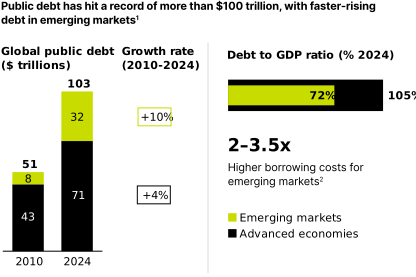
Global public debt has surged to a record $100 trillion, putting governments under severe strain. Advanced economies hold about 70% of this debt, but emerging markets are feeling the sharper pain — their share has doubled since 2010, and debt-to-GDP has jumped from 39% to 72%.
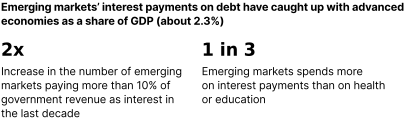
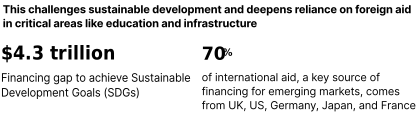
Emerging markets have borrowing costs 2 to 3.5 times those of the U.S., paying a record $921 billion in interest in 2024 — a 10% surge in one year. Many now spend more on debt than on health or education; across Africa, governments on average spend $70 per person on interest, compared with $63 on education and $44 on health. As international aid wanes and costs rise, they are being forced to trade classrooms and clinics for creditors, threatening development and future prosperity.