
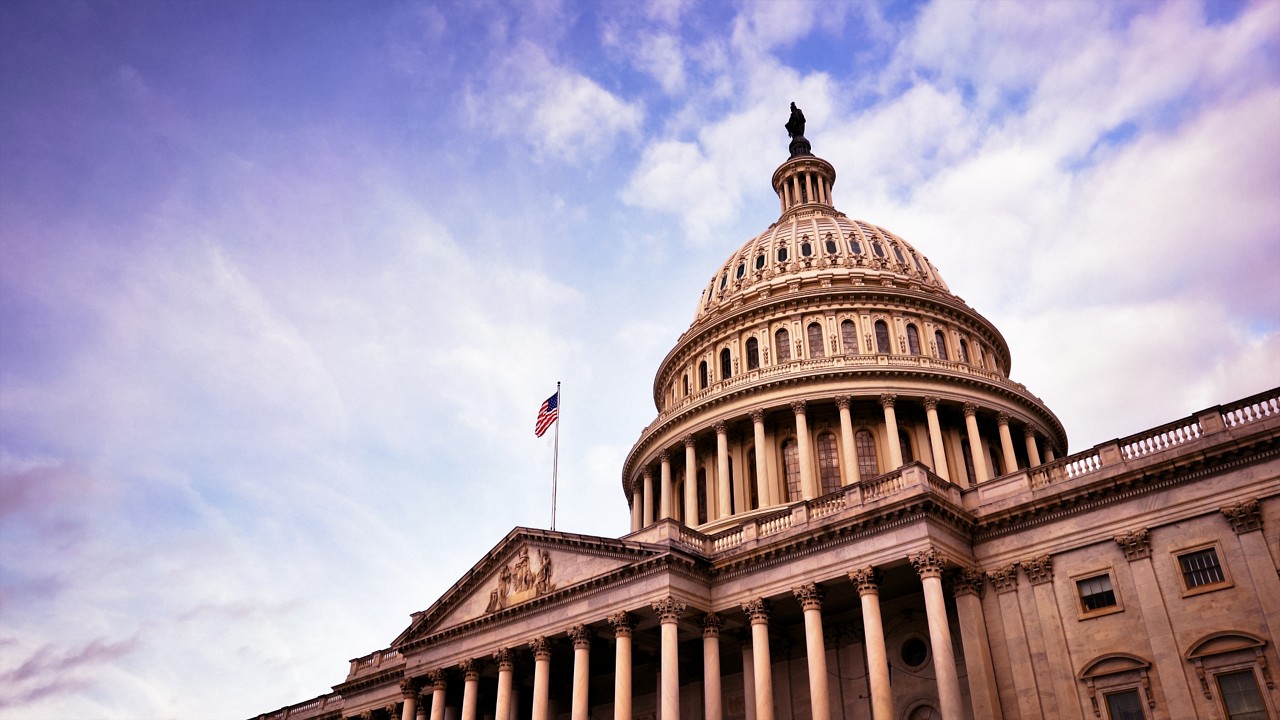
The 2026 midterm results represented a seismic shift in American politics. Democrats claimed at least seven Senate seats, including their first win in Kansas in nearly a century and their first wins in over a quarter century in Texas and South Carolina. Democratic gains in the House of Representatives look likely to rival their post-Watergate landslide in 1974.
“No one expected [a Democratic win] on this scale,” Myers said at the roundtable, held a day after the midterms to discuss what the results may mean for US policy, markets, and the business environment.
Midterms are typically a referendum on the sitting president, Myers noted, pointing to President Trump’s 37% approval rating, which he said was the lowest in 70 years at this point in the term, as well as frustration over the inflationary impact of tariffs and the Iran war, reports of ethical issues, and immigration enforcement. Hispanic voters swung to Democrats by 28 percentage points, according to early estimates cited by Myers. But even with full control of Congress, Democrats won’t be able to override a presidential veto to enact major policy changes, while President Trump retains broad authority over trade and foreign policy.
Expect a busy lame-duck session of Congress until January, followed by two years characterized more by gridlock than bipartisanship
Newly elected members won’t be seated in Congress until Jan. 3, so the president may make cabinet changes in the interim and a Supreme Court vacancy could arise while the current Senate can still confirm a successor, Myers said. Any attempts by the incoming Congress to roll back major elements of the administration’s agenda, such as raising taxes or regulating AI, are likely to be met with a presidential veto.
Myers also believes Democrats will be eager to use their new oversight powers in Congress to investigate potential conflicts of interest, including around pardons, and subpoena companies that have done business with administration officials and their families. Myers worries the new majority may overreach and said it would be a mistake to single out specific companies or individuals.
Targeted policy changes may be possible in specific areas such as healthcare, energy, and permitting reform
The incoming majority will not be powerless even if they can’t override a veto. The government’s need to raise the debt ceiling in the new year will give the Democrats leverage to pursue their priorities, Myers said, and reinstating federal subsidies for health insurance under the Affordable Care Act sits at the top of the list. They might find common ground with the Trump administration on measures to bring down prescription drug prices or generate bipartisan support to increase funding for renewables to help lower energy prices and perhaps restore subsidies for electric vehicles.
In anticipation of such changes, markets are already repricing risk by sector rather than on an index level, Myers said, with AI infrastructure plays and pharmacy benefit managers facing the biggest risk, while renewables stand to gain and defense spending is likely to hold despite pressure to cut it. Data centers have become a political target for both parties, but action to slow approvals or push AI hyperscalers to share energy costs is likely to come at the state level, particularly in Texas, Ohio, and Georgia, Myers said.
The election result will reassure foreign partners but won't restore the old order
The election outcome signaled that the US constitutional system works as designed, giving voters a chance to course-correct every two years, Myers said. That should reassure global investors and multinationals about the United States’ standing as a safe haven. But trade and foreign policy still sit firmly in presidential hands, and Myers expects the administration to focus its efforts there over the next two years, including ending the wars in Iran and Ukraine, where he was optimistic about progress.
He also believes the administration is likely to raise tariffs now that the midterms are over, with the EU and India the most likely targets because of their trade surpluses with the US.
We won’t know the full extent of America’s political realignment until the 2028 presidential election
Candidates on both sides are already maneuvering to run in a race with no incumbent. Vice President J.D. Vance is the putative frontrunner among Republicans, but the midterm results make his path steeper, though Myers noted Vance has strong support from tech leaders and a significant early fundraising advantage. Myers expects a number of Republicans to seek the nomination and try to set a post-Trump agenda, ranging from Secretary of State Marco Rubio and Florida Gov. Ron DeSantis to conservative commentator Tucker Carlson and potentially Nikki Haley, who served as ambassador to the United Nations in the first Trump administration.
The Democratic field is likely to be even more crowded, with Georgia Sen. Jon Ossoff, who won reelection with an 18-point margin, likely to vie with established figures like Pennsylvania Gov. Josh Shapiro and Kentucky’s Andy Beshear. Myers believes a centrist is likely to win the nomination because centrists played a dominant role in flipping those Republican Senate seats.
His advice for business leaders: Reach out now to the new congressional leadership and committee chairs, and potential Republican and Democratic candidates, and get to know them before the presidential race heats up.
This article is based on remarks by Charles Myers at the Oliver Wyman Forum’s Leadership Reimagined executive roundtable on November 4, 2026. The Leadership Reimagined series brings together CEOs, chairs, board members, and senior leaders from the public and private sectors to discuss today’s most challenging issues. The views expressed are those of the speaker.